
Does God Care When We Are In Trouble?
“How can a God of love, who has everything under His control, let such a thing happen to me?” asked a young woman who had suffered severe injuries after falling from a horse. Her pastor was silent for a moment and then gently asked, “Did you suffer much pain when they put you in the cast?”
“The pain was terrible,” she replied. “Did your father allow the doctor to hurt you that way?” he further asked. “Yes, but that was necessary,” she replied. The pastor pressed further, “Did he allow it even though he loved you—or because he loved you?”
A pause. Then, a quiet, stunned response: “You mean to suggest that because God loves me, He allowed me to get hurt?”
The pastor answered with a nod. “This thing is from Me. Let those five words from God comfort you. There will be a silver lining in the cloud. Yours is not a case of ‘bad luck.’ God planned this trial. If you are His child, He is preparing you for better service.”
Shakespeare once wrote, “In sickness let me not so much say, ‘Am I getting better of my pain,’ but rather, ‘Am I getting better for it.’” In the same way, as Christians, we should not ask, “When will I get out of this trial?” but “What will I get out of this trial?”
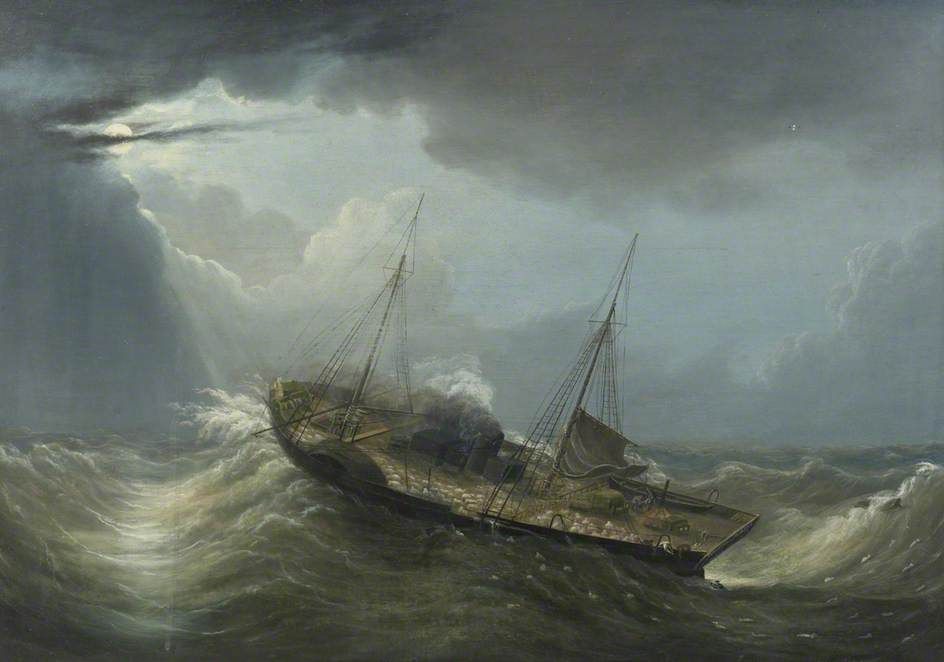
That young woman’s question echoes in many hearts today, including Christians: “Does God care when I am in trouble?” It’s the same question that even the disciples once asked Jesus as they faced a terrifying storm at sea. Let’s look to that familiar account in Mark 4:35–41 to discover what God wants us to know about trials and his care.
35 That day when evening came, he said to his disciples, “Let us go over to the other side.” 36 Leaving the crowd behind, they took him along, just as he was, in the boat. There were also other boats with him. 37 A furious squall came up, and the waves broke over the boat, so that it was nearly swamped. 38 Jesus was in the stern, sleeping on a cushion. The disciples woke him and said to him, “Teacher, don’t you care if we drown?”
39 He got up, rebuked the wind and said to the waves, “Quiet! Be still!” Then the wind died down and it was completely calm.
40 He said to his disciples, “Why are you so afraid? Do you still have no faith?”
41 They were terrified and asked each other, “Who is this? Even the wind and the waves obey him!”
This powerful story doesn’t just show Jesus’ authority over creation. It also reveals 4 truths about how God works in our trials and how deeply he cares for his children—even when it feels like he’s asleep in the storm.
1. Obedience Doesn’t Mean Smooth Sailing [vv. 35-37].
Did Jesus know the storm was coming? Of course, he did—and yet he still led the disciples straight into it. The storm was a part of that day’s training curriculum for the disciples. Many think storms only come from disobedience. That was true for Jonah. But here, the disciples entered the storm because they obeyed Jesus. They had left their homes and jobs to follow him—and still faced the wind and the waves.
Like Job, who was declared righteous yet suffered deeply (Job 1:8; 2:3), we’re reminded that obedience doesn’t exempt us from trials. God may not always protect us from storms—but he always protects us in them. Sometimes, he calms the storm. At other times, he lets the storm rage but calms his child.
Irrespective of the outcome, let’s never forget: “Being with Christ in the boat—even in a storm—is far safer than being on the shore without him.”
2. God May Seem Silent, But He’s Never Absent [v. 38].
The psalmist once cried, “Why, LORD, do you stand far off? Why do you hide yourself in times of trouble?” (Psalm 10:1) and “Awake, LORD! Why do you sleep? Rouse yourself! Do not reject us forever?” (Psalm 44:23). That’s exactly how the disciples felt that led them to cry out, “Teacher, don’t you care if we drown?”
Haven’t we prayed the same way? “God, if You love me, why am I going through this? Are You even watching?” However, the truth is that God never stops watching over his children. Even when he seems silent, he is at work, calling us to persevere by trusting him even in the darkest hours of life.
Isaiah 50:10 reminds us, “Who among you fears the LORD and obeys the word of his servant? Let the one who walks in the dark, who has no light, trust in the name of the LORD and rely on their God.”
3. Storms Drive Us to the Savior [v. 38].
Even though the disciples were afraid, the storm still drew them closer to Jesus. Their faith may have been weak, but it was still real. And Jesus didn’t rebuke them for waking him up—only for not trusting him sooner.
Yes, trials may cause some to harden their hearts and keep away from God. But for those who are his, they draw us closer to him. They help us to grow in our love for his Word. We find ourselves praying more. We discover what it means to lean—not on our own strength—but on his.
4. In the Storm, We Discover Who God Is [vv. 39–41].
After Jesus calmed the wind and the waves, the disciples were filled with awe. “Who is this? Even the wind and the waves obey him!” Through this terrifying trial, they saw God’s power and love in a whole new way.
And the same is true for us: trials deepen our understanding of God’s character. We begin to know—not just in our minds but in our hearts—that God is mighty, sovereign, and tenderly loving.
Faith That Endures the Storm.
Becoming a Christian doesn’t mean a life free of trouble. As one writer wisely said:
Satan has very subtly diverted our attention from our core message. Instead of proclaiming the Good News that sinners can be made righteous in Christ and escape the wrath to come, we have settled for a “gospel” which implies that God’s primary purpose in saving us is to unfold a “wonderful plan” for our lives to solve problems, make us happy in Christ, and rescue us from the hassles of this life.
Those who come to faith through the door of seeking happiness in Christ will think that their happiness is evidence of God’s love. They may even think that God has forsaken them when trials come and their happiness leaves. But those who look to the cross as a token of God’s love will never doubt his steadfast devotion to them.
As God’s children, we’re called to trust him wholeheartedly—even in the fiercest storms. If we can trust Jesus to save us from sin and death, surely we can trust him with our everyday trials and concerns. Faith drives out fear, just as fear drives out faith.
So let’s repent of our unbelief and cry like the man in Mark 9:24: “help me overcome my unbelief!” [Mark 9:24] And when we do, the Holy Spirit will help us experience the reality of Isaiah 26:3, “You will keep in perfect peace those whose minds are steadfast, because they trust in you.”
Yes—God Does Care When I’m Hurting.
Storms that come from obedience always come with Christ’s presence. And when he is with us, we can face even the fiercest storm and say with confidence: “Yes, my Lord and Savior Jesus Christ cares for me—even when I’m in the midst of a dark storm.”