
Redemption – The High Cost Jesus Paid For Our Freedom – Part 2
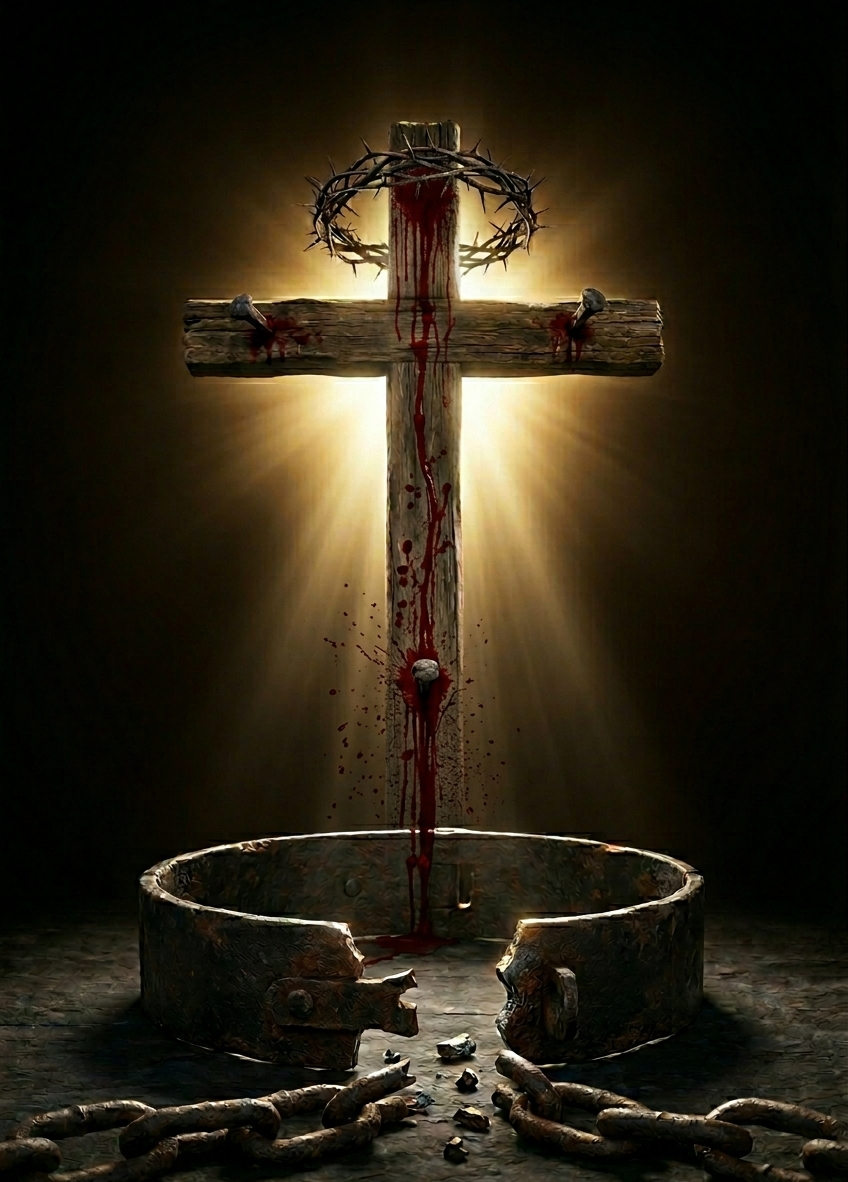
This is the second post on the series titled “Redemption—The High Cost Jesus Paid For Our Freedom.” In PART 1, we saw:
1. We are born into a world of “iron collars,” enslaved to our sin, our pride, and our rebellion against God.
2. We desperately need a Redeemer from the outside to step in and set us free.
3. On the cross, Jesus was treated as if He were guilty of our sins, so that we could be made right with God.
In light of these truths, let’s examine the result of redemption and how to receive God’s gift of freedom.
The Result: The Forgiveness of Sins
Ephesians 1:7 tells us that through this blood we have “the forgiveness of sins.” In the original language, the word “forgiveness” means release—like a prisoner let out of a cell or a massive debt canceled forever.
The Debt Paid in Full
Imagine standing before a judge with a fine you can never pay. The evidence is clear. The judgment is fair. You are guilty, and you have no way to pay the penalty. Then, a redeemer steps forward and pays your fine in full.
The judge declares the case closed. The debt is satisfied. You walk out of the courtroom a free person—not because you were innocent, but because your debt was paid by someone else.
Breathtaking Mercy
The Bible describes this forgiveness with images that show how complete God’s mercy really is. It is not a “partial” pardon; it is a total cleansing:
- Removal: Our sins are removed “as far as the east is from the west” (Psalm 103:12).
- Burial: Our sins are thrown into “the depths of the sea” (Micah 7:19).
- Erasure: God says, “their sins and lawless acts I will remember no more” (Hebrews 10:17).
When God says He will “remember no more,” it does not mean He has forgotten the facts of what happened. Instead, it means He has made a divine choice: He will never bring those sins against you in judgment again.
The iron collar is not just unlocked; it is gone.
The Proof: A Living Redeemer
If the story ended at the grave, we would be left wondering if the payment was actually enough. But by raising Jesus from the dead, God the Father showed that the “High Cost” was fully accepted. The resurrection is like a signed receipt—it is the proof that our debt is paid in full and the legal exchange is complete.
Three days after his death, Jesus was raised to life. The Bible explains it this way:
“He was handed over to die because of our sins, and he was raised to life to make us right with God.” (Romans 4:25).
God’s Receipt
The empty tomb is God’s proof that our sin debt is gone. It is His receipt to show that the payment for our sins was made in full. If the payment had not been enough, the grave would have held Him. But because He rose, we know that God’s justice is satisfied.
The freedom Jesus purchased is not just a story from the past—it is a reality for us today.
The empty tomb is God’s proof to the world that Jesus once-for-all paid the full price for our sins.
The Source: The Riches of His Grace
Why would God do this? Ephesians 1:7–8a says it was “in accordance with the riches of God’s grace that he lavished on us.”
In other words, God did this because His grace is so rich. The word “lavish” means to pour out more than is needed. God did not just give us a drop of mercy; He flooded us with it. He did not wait for us to become “better people” before He acted. He acted because He is rich in love.
The Ladder Versus the Cross
Most religions in the world offer a “ladder” approach to God. They teach that if you climb high enough and do enough good things, you might eventually reach God. But the message of Jesus offers a cross. It tells us that we could never climb high enough, so God came down to us.
On that cross, Jesus cried, “It is finished!” (John 19:30). He did not say, “I have started the work, now you must finish it.” He did not say, “I have paid my half, now you pay yours.” He completed the work entirely.
Redemption is not a wage you earn through effort; it is a gift you receive through faith.
The iron collar has been broken by His strength, not your own.
The Work of the Triune God
This story of redemption is the work of the Triune God—the Father, the Son, and the Holy Spirit—working together.
- The Father planned it. Before the world was even created, God the Father chose to love us and provide a way for us to return to Him.
- The Son completed it. Jesus Christ, God’s Son, paid the high cost through His blood on the cross. He did the work that we could not do.
- The Holy Spirit applies it. God the Holy Spirit brings this redemption to our hearts. He awakens us to the truth, helps us to repent of our sins, and gives us the faith to trust in Jesus. Not only that, but He also comes to live inside of us permanently to assure us that we are forgiven and that we now belong to the family of God. He gives us the strength to live a new life of obedience.
That is why our spiritual deliverance is not fragile or weak. It does not depend on our human effort; it rests on God’s divine purpose. We live in this hope until the day when our redemption is final—the day we stand before Jesus, freed forever even from the presence of sin.
The Father planned our redemption. The Son completed it. The Holy Spirit applies it.
But a gift, no matter how expensive, must be accepted before it belongs to you.
Accepting the Gift
Perhaps you feel a heavy weight of guilt. You may have tried to silence it by keeping busy, trying to be a “good person,” or becoming more religious. But the “iron collar” remains. Deep inside, you realize you are a prisoner to your own sin.
The Good News is that you do not have to stay that way. Redemption is a gift waiting for you to receive it. Here’s how you can receive it:
- Admit your need. Admit you have sinned and that you cannot remove your own “iron collar.” The Bible says, “Only acknowledge your guilt—you have rebelled against the Lord your God” (Jeremiah 3:13).
- Turn to God. Turn away from your sins and stop relying on your own strength. The Bible calls this repentance. Jesus Himself said, “Repent of your sins and turn to God” (Matthew 3:2).
- Trust in Christ alone. Believe that the blood of Jesus was the full and final payment for your sins. Accept Him as your Lord and Savior. The Bible says, “If you openly declare that Jesus is Lord and believe in your heart that God raised him from the dead, you will be saved” (Romans 10:9).
Redemption is offered freely because the price has already been paid. The door is open. Your freedom has been purchased.
Will you receive God’s free gift of freedom?
Or
Will you remain in slavery to sin and face God’s judgment?
Living in Freedom
Redemption does more than change where you go after you die; it transforms how you live right now. This drastic change shows up in at least two main ways: praise and obedience.
1. Unending Praise — Even in Suffering
The first response to redemption is praise. The Apostle Peter wrote to believers who were losing their homes and their safety because of their faith. Even so, he began his letter with these words:
“Praise be to the God and Father of our Lord Jesus Christ! In his great mercy he has given us new birth into a living hope through the resurrection of Jesus Christ from the dead.” –1 Peter 1:3
Praise in the Fire
It is important to notice that Peter wrote this during a time of intense suffering. Yet, he begins with praise. Why? Because redemption gives us something that pain cannot touch: a living hope and a secure future. He tells them: “In all this you greatly rejoice, though now for a little while you may have had to suffer grief in all kinds of trials” (1 Peter 1:6).
Perspective in Pain
Redemption does not remove suffering, but it changes how we see it. We do not praise God because life is easy; we praise Him because the Cross has solved our greatest problem forever. When our guilt is removed and our future is safe, we find a peace that the world cannot give. Even our deepest pain is placed in its proper perspective.
Faith Fighting Back
Consider Paul and Silas in prison (Acts 16). Their backs were bleeding and their feet were locked in chains. Yet, at midnight, they were praying and singing hymns to God. Why? Because the metal chains on their wrists were nothing compared to the “iron collar” of sin that Christ had already removed.
Praise is not pretending that life does not hurt; it is faith choosing to trust God’s love instead of falling into despair.
The heart of a redeemed person says: “If God gave His Son for me, He will not abandon me now.” That is why we can say with the Psalmist: “I will praise the Lord at all times. I will constantly speak his praises” (Psalm 34:1).
When we truly understand the high cost of our redemption, praise becomes the natural language of the soul. This is the spiritual vision that led Fanny Crosby to write her classic hymn: “Redeemed, how I love to proclaim it!”
2. Joyful, Grateful Obedience
Redemption does more than change the songs we sing—it also changes how we live every day. The Apostle Paul writes, “You have been set free from sin and have become slaves to righteousness” (Romans 6:18).
A New Ownership
Redemption means ownership. We “were bought at a price” (1 Corinthians 6:20). To some, this sounds like a contradiction: we are freed from one master only to belong to another. However, we must realize that no one is truly “independent.” We are all following something—either the “iron collar” of our selfish desires or the leading of a King who loves us. The difference is not in the fact of being owned, but in the heart of the Master.
Our new Master is not harsh. He is the One who suffered for us. Because of this, obedience is not a cold duty—it is a grateful response to the One who gave everything.
He did not buy us to use us simply as an object; he bought us to love us as His own.
The Rescuer
Imagine a man drowning in the ocean. As he sinks, a rescuer dives in, pulls him to shore, and nearly loses his own life in the process. If that rescued man later ignores or insults his rescuer, we would say something is terribly wrong. But if he honors and trusts his rescuer, we see the natural response of a grateful heart.
This is how we follow Christ. We do not obey to earn our freedom—we obey because our freedom has already been given. This changes how we face daily life:
- We fight sin not because we fear being rejected, but because we have already been accepted.
- We live holy lives not to impress God, but because we belong to Him.
- We forgive others because we have been forgiven so much.
- We endure difficult times knowing that God is not cruel; He is lovingly training us because we are His children.
Even in hard times, our obedience has meaning. We can say, “My Savior obeyed God even when it meant death. By His grace, I will follow Him.” Jesus said, “If you love me, keep my commands” (John 14:15).
Love is the engine of obedience.
The more clearly we see the cross, the less we want to rebel.
Remember Your Freedom
As you go forward, keep these three truths close to your heart:
- Never forget what you were rescued from. Remember the “iron collar” of sin that you were helpless to remove.
- Never forget what it cost. Remember the staggering price Jesus paid to set you free.
- Never forget who now owns you. You belong to a King who loves you with an everlasting love.
A New Identity
When praise rises from a heart like yours, and when you obey God out of love, the world begins to see the beauty of his message reflected in a human life.
You are no longer defined by your past failures. You are defined by a finished redemption.
A Global Song
This beauty is not for us alone. The song of the redeemed is a global song that will one day fill the heavens:
And they sang a new song, saying: “You are worthy… because you were slain, and with your blood you purchased for God persons from every tribe and language and people and nation.” –Revelation 5:9
The price has been paid for people of every kind—including you.
If you would like to order gospel tracts based on this series, they can be found at printmytract.com.