
Redemption – The High Cost Jesus Paid for Our Freedom – Part 1
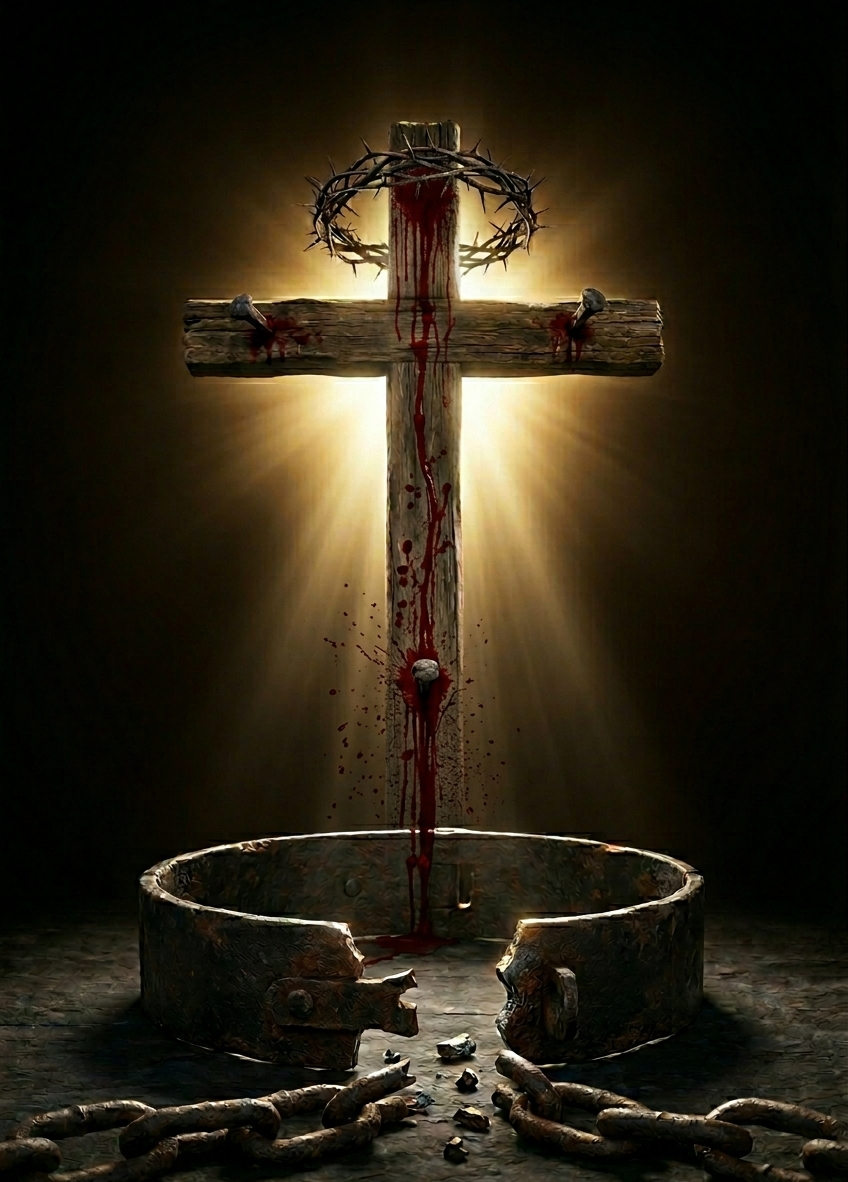
Everyone longs to be free. We want to be free from regret and free from guilt. Some people strive to live a perfect life only to find they are never “good enough” to feel truly free. Others, knowing they cannot maintain such a high standard, do not even try. Whether through striving for perfection or living recklessly, the result is often the same: feelings of anxiety, depression, discouragement, shame, and hopelessness. Many people live in bondage, and beneath all these feelings lies one vital question: Can I ever be truly free?
The Bible answers that question with one powerful word: Redemption. This word represents a very high cost, but it also shines with hope. To understand the beauty of this word, we must first understand the reality of our condition.
The Slave Market
In the ancient world, redemption was a term used in the slave markets. It described the price paid to buy a person out of slavery. A person in bondage was helpless to free himself. His only hope was a redeemer—someone with the wealth to pay his price and the mercy to set him free.
The Iron Collar
A missionary in West Africa once searched for the right way to explain this to a village. When he asked how to say “redeem” in their language, his assistant replied: “We say that God took our heads out.”
Years earlier, slave traders had marched prisoners through their villages with heavy iron collars locked around their necks. If a village chief recognized a friend among the prisoners, he could pay a ransom (the price for freedom). Once the price was accepted, the iron collar was unlocked, and the prisoner’s head was removed from the yoke.
He was free because he had been redeemed.
Our Spiritual Condition
This is a vivid picture of our spiritual condition. We are born into a world of “iron collars,” enslaved to our sin, our pride, and our rebellion against God. We may try to ignore the weight or even “decorate” the chains to make them look better, but we cannot remove them ourselves.
The Bible says that God is holy. This means He is completely separate from sin and is perfectly good, pure, and righteous. This creates a serious problem for us. According to the Bible, even a wicked thought is a sin (Matthew 5:28). Sin is not only doing wrong things (1 John 3:4), but it is also failing to do the right things (James 4:17).
Because God is perfectly pure and holy, we can never meet His standard on our own, no matter how hard we try. No amount of religious effort or self-improvement can unlock the collar of our mistakes.
Since our debt is owed to a God who lives forever, the consequences of our sin also last forever.
We are in a state of bondage—carrying a debt far too great for us to pay. We desperately need a Redeemer from the outside to step in and set us free.
The Price of Life
This is where the story of redemption takes a staggering turn. In a human slave market, freedom can be bought with money. But in the court of Heaven, the debt of sin is so great that earthly money is worthless.
Because sin leads to death, God has established that forgiveness requires the payment of a life. It requires blood.
Life is the only payment for life; blood is the only ransom for blood.
This principle is found throughout the entire Bible:
- It is the blood, given in exchange for a life, that makes purification possible. –Leviticus 17:11b
- Without the shedding of blood there is no forgiveness. –Hebrews 9:22
The Greater Sacrifice
In the Old Testament, animal sacrifices were more than just rituals; they were lessons from God. Every sacrifice whispered a promise: “A greater sacrifice is coming.” That ultimate sacrifice was Jesus Christ—the sinless God-Man.
The Apostle Peter reminds us that the price paid to set us free from our sins was not silver or gold. Instead, it was the “precious blood of Christ” (1 Peter 1:18-19). In the book of Ephesians, the heart of this Good News is made clear:
In him [Jesus] we have redemption through his blood, the forgiveness of sins, in accordance with the riches of God’s grace that he lavished on us. –Ephesians 1:7-8a
Our Freedom Purchased
To be “redeemed” means that Jesus Christ stepped into the slave market of this world. He paid the price for our sins by giving His own life on the cross. By doing this, He unlocked the iron collar of sin from our necks and set us free.
However, to truly value this freedom, we must look closely at the three ways our Redeemer suffered to buy it:
- Physical
- Emotional and Relational
- Spiritual
The Staggering Cost: Christ’s Threefold Suffering
1. Physical Suffering: The Brutality of the Cross
The Gospel writers describe the crucifixion with surprising simplicity: “They crucified him” (Mark 15:24). They did not need to add details because, in that world, everyone knew the unspeakable horror of the cross.
The Scourging and the Thorns
Before reaching the cross, Jesus endured scourging. He was tied to a post and beaten with a Roman whip that had sharp pieces of bone and metal tied to the ends. Each strike tore the skin from His back. Many prisoners died from this beating alone.
After this, a crown of long, sharp thorns was pressed into His head. Mocked and spit upon, He was forced to carry His own heavy wooden cross toward the place of death. In the Roman world, carrying your cross meant a one-way trip; there was no turning back.
The Iron Spikes
Then came the nails—which were more like heavy iron spikes. They were driven through His wrists and His feet, crushing the nerves and sending shocks of fire through His body. Above Him, a sign was placed that read: King of the Jews. While this was the Roman legal charge and condemnation, the Bible tells us it was actually our sins that nailed Him there (Colossians 2:13-15).
The Struggle for Breath
When the cross was lifted and dropped into the ground, the impact sent waves of shock through His body. Every breath became a battle. To breathe in, He had to push upward on the nails in His feet, scraping His torn back against the rough wood. To breathe out, He had to slump downward, again stretching His wounded nerves.
Death came slowly—not just from blood loss, but from total exhaustion and the agony of the struggle to breathe. For six hours, Jesus endured this torment. Yet, the nails did not hold Him there. Love did—love for God the Father and love for us! As He said:
“No one can take my life from me. I sacrifice it voluntarily.” –John 10:18
The nails did not hold Him there. Love did.
2. Emotional and Relational Suffering: Rejection and Shame
Redemption also required emotional and relational suffering. To buy our freedom, Jesus had to endure total isolation. He was betrayed by Judas—sold for the price of a slave. He was denied by Peter. Both of these men were His own disciples! His closest friends ran away in His hour of greatest need. False witnesses accused Him, soldiers mocked Him, and people walking by hurled insults at Him.
The Weight of Shame
Crucifixion was designed not only to kill, but to humiliate. Victims were stripped of their clothes and exposed to the public. The Son of God hung in shame before the very world He created. He took upon Himself the embarrassment and the “iron collar” of our disgrace.
The Deepest Wound
Yet the most painful blow was not human mockery, but being isolated from God the Father. The One who had always known perfect love and fellowship with the Father entered into total loneliness. This was the loneliest moment in the history of the universe.
Why did He do this? He did it so that we would never have to be alone.
- He was forsaken so that we might be welcomed.
- He was condemned so that we might be declared innocent.
- He was cast out so that we might be brought into God’s family.
Through the loneliness of the cross, the bridge back to God was built.
Jesus was forsaken so that all who believe in Him might never be forsaken.
3. Spiritual Suffering: Bearing Sin and Wrath
As terrible as the physical and emotional suffering were for Jesus, it still does not fully explain the suffering of the cross. Many men have died by crucifixion, but only one person has ever carried the weight of the whole world’s sin. This was a spiritual suffering that no human eye could see—it was the moment Jesus took our place to pay the debt we owed to God.
The Cup of Wrath
Before He went to the cross, Jesus spoke of a “cup” (Matthew 26:39). This cup represented God’s holy and just anger toward sin. The thought of “drinking” this cup was so heavy that it caused Jesus to sweat drops of blood in the garden of Gethsemane. Yet, on the cross, He drank it all.
He took the judgment we deserved until not a single drop was left. Because He suffered the full penalty for us, there is no judgment left for those who trust in Him. The “storm” of God’s justice has passed because the Savior stood in it for us.
Legal Abandonment
As Jesus hung there, a strange darkness covered the land. This was a sign of divine judgment. From that darkness, Jesus cried out: “My God, my God, why have you forsaken me?” (Matthew 27:46).
For the first time in eternity, the Son experienced the loss of the Father’s comforting presence. This was not a break in the Trinity (the nature of who God is), but a “legal abandonment.” As the one carrying our sin, Jesus was receiving the official sentence for our rebellion. He was experiencing the separation from God that we deserved—the agonizing pain of being totally alone and rejected.
This is the heart of redemption: Jesus was rejected so we could be accepted.
Our Debt Transferred
On the cross, a “legal exchange” took place. Jesus did not become a sinner Himself, but He took our place. He died as a substitute for us. Our guilt was transferred to Him—which means it was legally moved from our account to His. Every lie, every act of pride, and every secret mistake—past, present and future—was put on Jesus.
This means that on the cross, Jesus wore our “iron collar.” The Bible says in Isaiah 53:5-6: “He was pierced for our rebellion, crushed for our sins… the Lord laid on him the sins of us all.”
The Bible also says in 2 Corinthians 5:21: “For God made Christ, who never sinned, to be the offering for our sin, so that we could be made right with God through Christ.”
To put it simply: God the Father treated his Son, Jesus, as though he had committed every sin we have ever committed. Because the punishment was placed on him, the “legal debt” was paid in full. This means that God is perfectly just—He did not ignore our sins or pretend they didn’t happen. Instead, He made sure the penalty was met.
Now, because the law has been satisfied, God is free to forgive and set free all who accept the sacrifice of Jesus. No one can accuse God of being unfair or unjust for letting sinners go free, because the price has already been paid by another.
On the cross, Jesus was treated as if He were guilty of our sins, so that we could be made right with God. He was treated as a criminal so that we could be treated as children of God.
In the next POST, we will look at the result of redemption from sin and how to receive God’s gift of freedom.